
Most swimmers believe Butterfly is all about strength.
They watch elite swimmers glide effortlessly down the pool and assume they’re simply stronger, fitter, or naturally gifted. So they spend countless workouts swimming more Butterfly, hoping that more laps will eventually make the stroke feel easier.
Unfortunately, that approach rarely works.
Instead, every length becomes a battle against the water. The stroke feels rushed, breathing becomes difficult, the hips begin to sink, and by the final few strokes, good technique starts to disappear.
The problem usually isn’t strength.
It’s Bodyline.
The fastest Butterfly swimmers don’t waste energy fighting the water. They maintain a connected Bodyline that allows every kick, pull, and breath to flow together. Instead of constantly losing momentum and having to rebuild their speed with every stroke, they stay balanced, streamlined, and moving forward. That’s one of the biggest reasons elite Butterfly looks so smooth—even at race pace.
The good news is that Bodyline isn’t something you’re born with.
It’s a skill that can be developed through purposeful practice and the right drills.
In this article, we’ll explain what an effective Butterfly Bodyline actually looks like, why so many swimmers struggle to maintain it, and the best Bodyline Drills for Butterfly we use every day at Swim Like A Fish. Whether you’re learning the stroke for the first time or looking to make your Butterfly more efficient, these drills will help you build a longer, more connected stroke that creates less drag, preserves momentum, and makes every pull and kick more effective.
When coaches talk about Bodyline, they’re describing how well a swimmer keeps their body connected from their fingertips all the way to their toes while moving through the water.
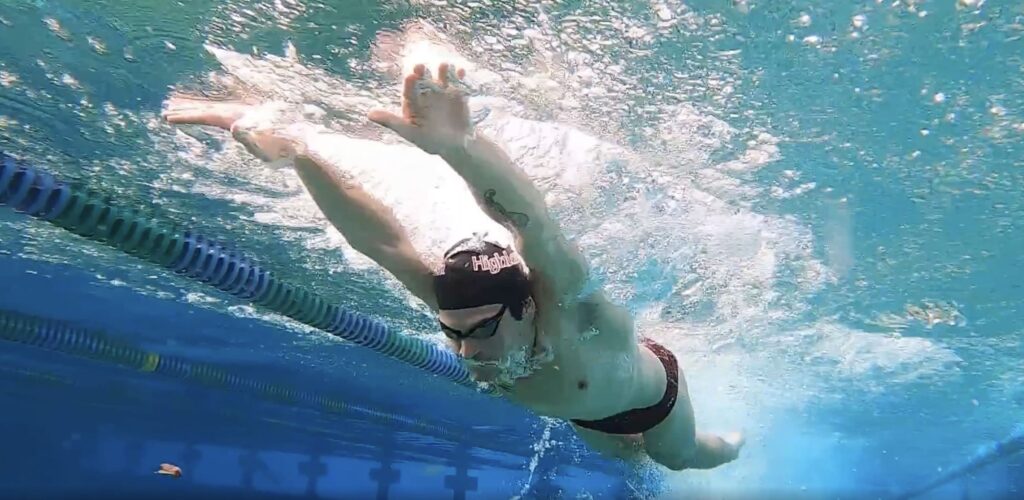
Many swimmers mistakenly think this means staying perfectly flat throughout the stroke. In reality, Butterfly strokes are constantly changing shape. The chest rises and falls, the hips follow, and the legs finish the movement with a powerful Dolphin Kick. The goal isn’t to eliminate movement—it’s to keep every part of the body moving together as one continuous unit.
Think of cracking a whip.
The motion starts near the handle before smoothly traveling through the rest of the whip until it reaches the tip. Butterfly works much the same way. A small movement begins through the upper body before flowing naturally through the hips and into the legs. When this sequence stays connected, swimmers create propulsion while maintaining a long, balanced position in the water.
When that connection is lost, everything begins to fall apart.
Some swimmers lift their head too early to breathe, causing their hips and legs to drop. Others over-press their chest, creating a wave that’s much larger than necessary. Some try to generate all of their power from their knees instead of allowing the entire body to contribute to the movement.
The result is always the same.
More drag.
Less momentum.
A Butterfly stroke that feels far harder than it should.
If you’d like to dive deeper into how this wave moves through the body, we’ve written several articles explaining what undulation is, the different styles of Butterfly undulation, and whether every swimmer should undulate the same way. For this article, though, we’re going to stay focused on something even more practical: learning how to build a better Bodyline through purposeful drills.
One of the biggest misconceptions about Butterfly is that swimmers lose their Bodyline because they aren’t strong enough.
Strength certainly helps, but it’s rarely the root cause.
More often, swimmers lose their Bodyline because they rush the stroke.
The first mistake usually happens during the breath. Instead of allowing the chest to rise naturally, swimmers lift their entire head to clear the water. As the head goes up, the hips immediately fall. That forces the next kick to work much harder just to recover the body position that was lost during the breath.
Another common mistake is pulling too early.
Rather than allowing the chest to initiate the stroke, swimmers immediately begin pulling with their arms. This disconnects the upper and lower body, making Butterfly feel like a collection of separate movements instead of one smooth rhythm.
The kick creates its own problems as well. Many swimmers bend excessively at the knees, creating a bicycle-like action instead of driving the movement from the hips. Although this often feels powerful, it actually produces extra drag while reducing the effectiveness of both kicks.
Even the arm recovery can disrupt Bodyline. If swimmers recover with stiff shoulders or throw their arms forward aggressively, their body position changes dramatically every stroke. Instead of staying balanced, they’re constantly shifting up and down, losing the momentum they worked so hard to create.
That’s exactly why Butterfly drills are so valuable.
Good drills slow the stroke down enough for swimmers to recognize these mistakes before they become habits. Rather than thinking about swimming fast, they can focus on maintaining connection between the head, chest, hips, and legs. Once that connection becomes automatic during drills, it becomes much easier to carry into full-stroke Butterfly.
In the next section, we’ll look at the Bodyline drills we use most often at Swim Like A Fish to help swimmers build a smoother, more efficient Butterfly stroke that wastes less energy and feels dramatically more connected.
The best Bodyline Drills for Butterfly all have one thing in common: they teach swimmers how to stay connected from their fingertips to their toes. Some focus on the chest press, others improve rhythm, while several reinforce how the Dolphin Kick supports the entire stroke. Together, these drills build a longer, more efficient Butterfly.
One of the biggest mistakes swimmers make is trying to fix Butterfly by simply swimming more Butterfly. As fatigue sets in, technique begins to break down. The head lifts higher to breathe, the hips start to sink, and every stroke requires more effort than the last.
That’s why coaches rely on drills.
Rather than asking swimmers to think about every part of the stroke at once, each drill teaches one feeling at a time. As those feelings come together, maintaining a strong Bodyline during full Butterfly becomes much more natural.
Let’s look at some of our favorite Bodyline Drills for Butterfly stroke and what each one teaches.
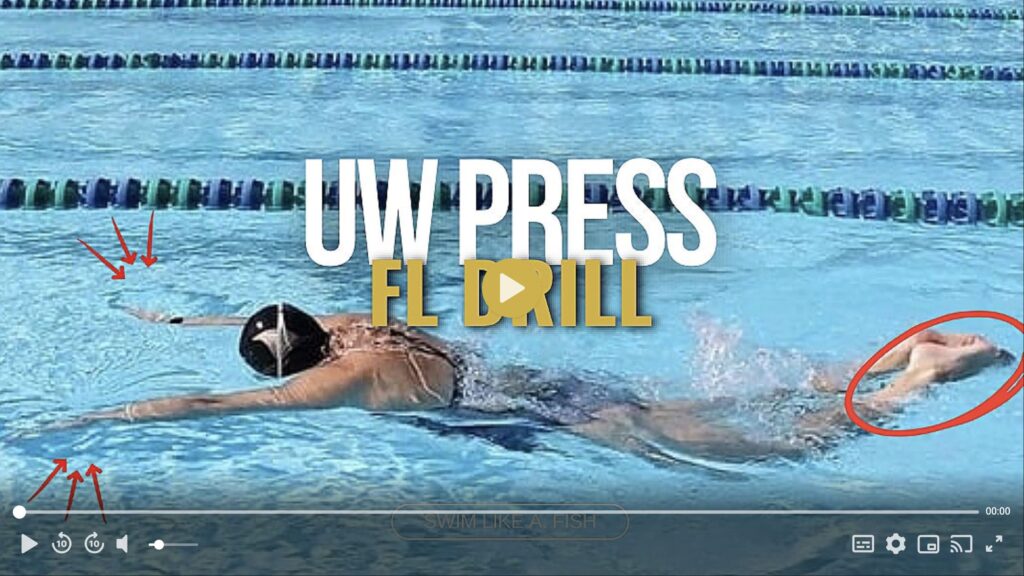
If there were one drill we’d recommend to almost every Butterfly swimmer, this would be it.
The Underwater Press teaches swimmers where Butterfly movement should begin. Instead of initiating the stroke with the arms or forcing a large Dolphin Kick, swimmers learn to gently press the chest downward while allowing the hips to respond naturally. This creates the beginning of an efficient body wave without exaggerating the movement.
Many swimmers are surprised by how small this motion actually is. Elite Butterfly isn’t built on huge undulations that send the body deep underwater. Instead, the best swimmers create subtle movements that keep their Bodyline long while minimizing drag.
As you practice this drill, focus on feeling the movement travel through your body rather than creating it independently with different body parts. Your head, chest, hips, and legs should remain connected throughout the entire motion.
Once swimmers understand this feeling, nearly every other Butterfly drill becomes easier to learn.
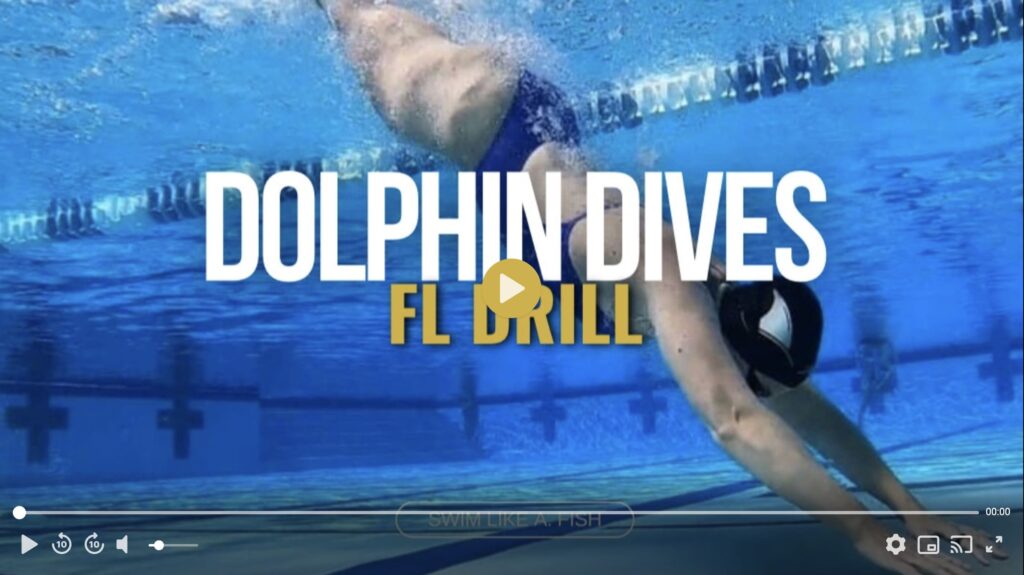
After learning how to initiate the body wave, swimmers need to understand how that movement travels through the rest of the body. Dolphin Dives are one of the best ways to develop this awareness because they exaggerate the natural sequence of Butterfly without requiring a complete stroke.
Instead of thinking about pulling or breathing, swimmers simply focus on moving smoothly through the water. The chest begins the movement, the hips follow, and the legs finish the wave with a relaxed Dolphin Kick. This encourages the entire body to work together instead of creating separate movements above and below the waist.
One of the biggest advantages of Dolphin Dives is that swimmers can immediately feel when their timing is off. If they bend excessively at the knees or try to force the movement from their legs, the drill quickly becomes awkward and inefficient. When everything stays connected, however, the motion feels surprisingly smooth and effortless.
Don’t worry about diving deep into the water. The goal isn’t to create the biggest wave possible. Instead, focus on maintaining a long Bodyline while allowing the wave to flow naturally from one end of the body to the other.
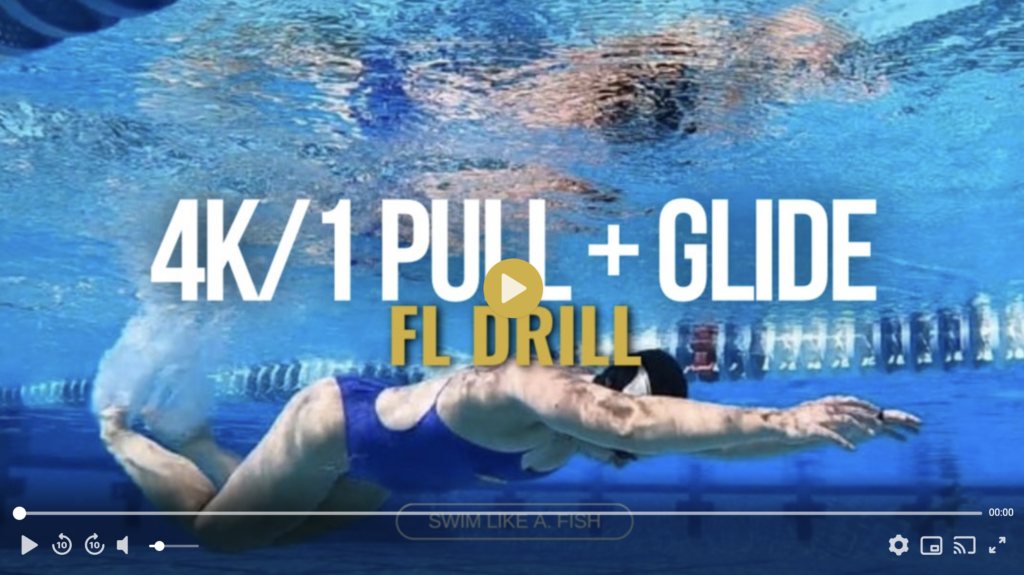
Once swimmers can create a connected body wave, the next challenge is learning how to hold that Bodyline between strokes. That’s exactly what makes this drill so valuable.
By performing four Dolphin Kicks before taking a single Butterfly pull, swimmers spend much more time in a streamlined position than they would during a normal Butterfly stroke. The glide that follows immediately exposes whether they’ve maintained good alignment or created unnecessary drag.
If the Bodyline stays long and balanced, the swimmer will continue traveling forward with very little effort. If the head lifts too early, the hips drop, or the kick becomes disconnected, momentum disappears almost instantly.
Rather than rushing into the next repetition, take a moment to notice how the glide feels. Did the water support your body, or did it feel like you suddenly came to a stop? That answer provides immediate feedback about your Bodyline.
This drill also reinforces an important lesson that many swimmers overlook: fast Butterfly isn’t created during the pull alone. It’s built by preserving as much speed as possible between strokes.
The Surf Drill is one of our favorite progressions because it teaches swimmers how to stay high in the water while connecting the first Dolphin Kick to the beginning of the stroke.
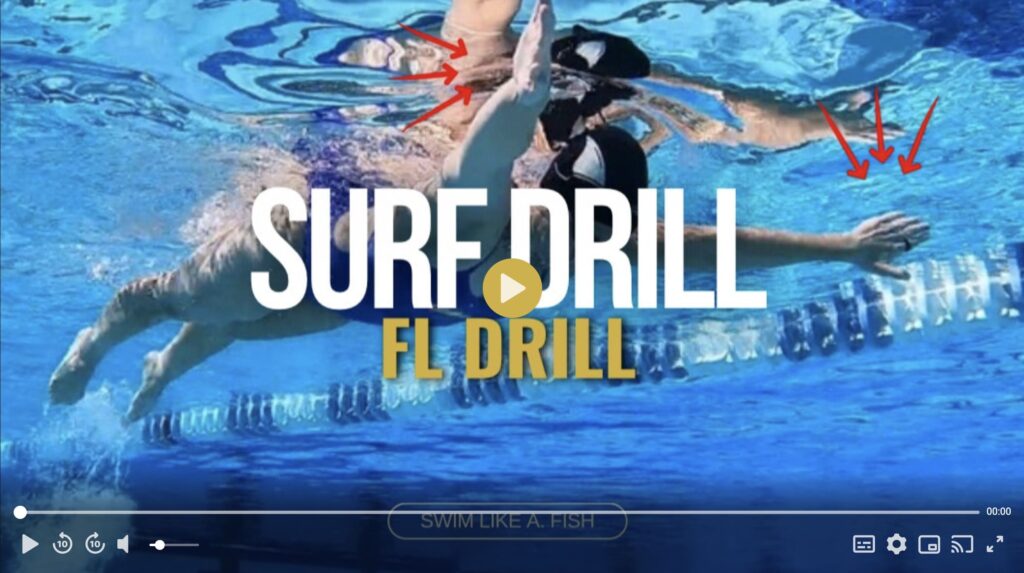
The Surf Drill is one of our favorite progressions because it teaches swimmers how to stay high in the water while connecting the first Dolphin Kick to the beginning of the stroke.
Many Butterfly swimmers spend too much time moving up and down instead of forward. They dive too deep after every breath before having to climb back toward the surface on the next stroke. Not only does this waste energy, but it also creates unnecessary drag throughout the swim.
The Surf Drill encourages a much flatter path through the water. Instead of producing a dramatic wave, swimmers learn to “surf” across the surface while maintaining a connected Bodyline from the chest through the hips and into the legs.
As your confidence grows, you’ll begin to notice that Butterfly feels less like fighting the water and more like riding over it. That’s exactly the feeling we’re trying to develop before returning to full stroke.
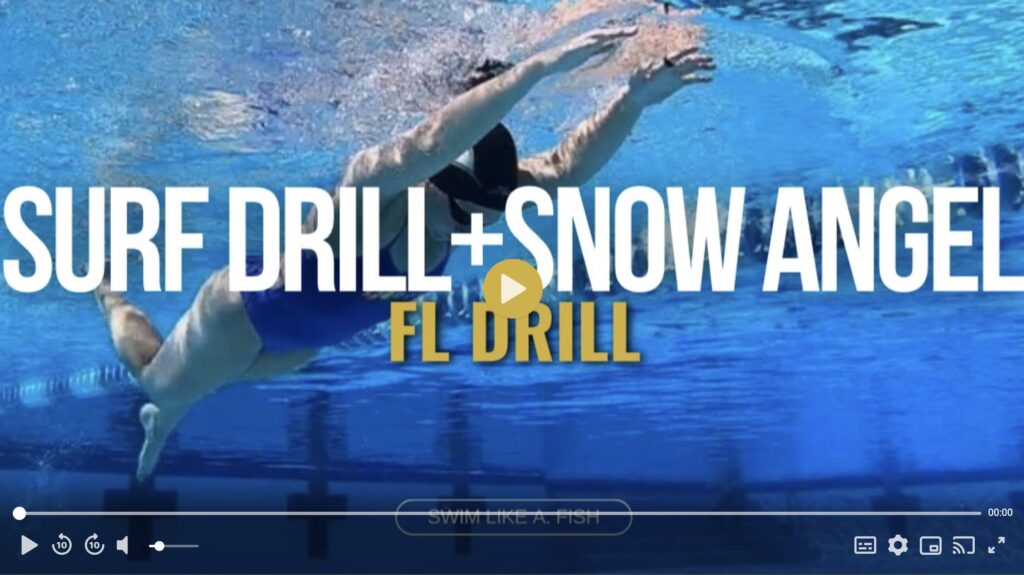
Once swimmers feel comfortable maintaining their Bodyline during the Surf Drill, it’s time to introduce the recovery. That’s where the Surf Drill + Snow Angel progression becomes incredibly valuable.
Instead of immediately recovering the arms over the water like a normal Butterfly stroke, swimmers perform a wide, relaxed “snow angel” recovery across the surface. This slows the movement down and removes much of the tension that often causes swimmers to lose their Bodyline.
Many swimmers become so focused on throwing their arms forward that they completely forget about the rest of their body. As the shoulders tighten and the head begins to lift, the hips sink and the rhythm of the stroke disappears. The Snow Angel recovery encourages swimmers to stay patient, relaxed, and balanced while keeping the body connected throughout the recovery.
As you perform this drill, try to keep your chest, hips, and legs moving continuously. The arms should simply recover over a Bodyline that is already stable instead of creating the movement themselves.
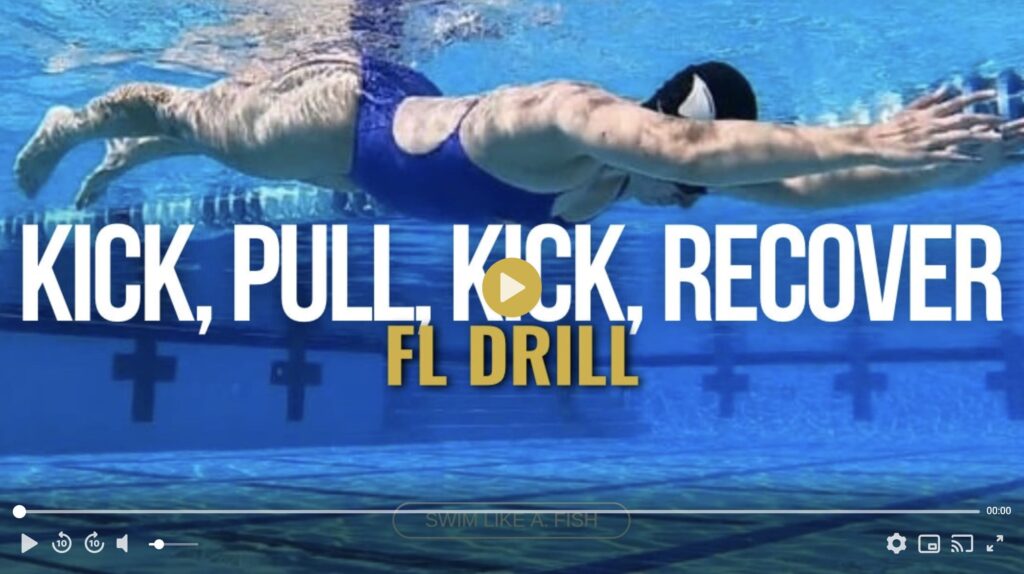
Butterfly can feel overwhelming because so many things happen within a single stroke. The Kick, Pull, Kick, Recover Drill breaks the stroke into individual pieces, giving swimmers time to understand how each movement contributes to maintaining a connected Bodyline.
Rather than rushing from one action to the next, swimmers pause briefly between each phase of the stroke. This allows them to recognize how the first kick supports the catch, how the pull works with the body’s natural wave, and how the second kick helps finish the stroke before the recovery begins.
One of the biggest coaching advantages of this drill is that it exposes sequencing errors almost immediately. If swimmers initiate the pull too early or allow the head to lift excessively during the breath, the entire rhythm falls apart. When everything happens in the correct order, however, the stroke suddenly feels smoother and far less exhausting.
Remember that Butterfly is a sequence of connected movements, not four separate actions performed one after another.
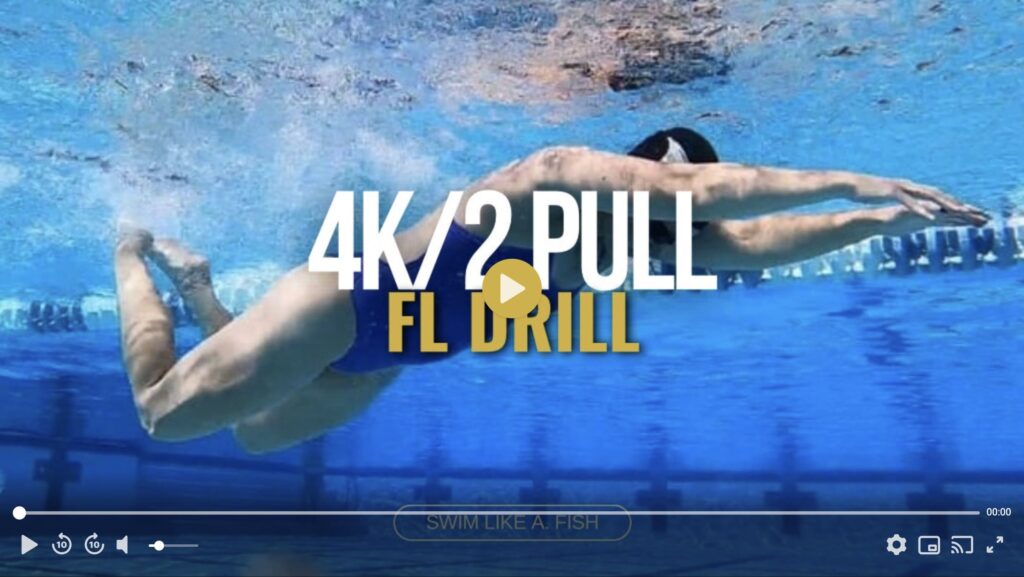
After learning individual movements, swimmers need to begin maintaining their Bodyline over multiple strokes. The 4 Kicks, 2 Pulls Drill bridges that gap by extending the rhythm without requiring continuous Butterfly.
Those four kicks reinforce balance and momentum before the swimmer performs two relaxed strokes while trying to preserve exactly the same Bodyline they established during the kicking phase. Rather than creating speed through powerful pulls, the goal is to carry the speed generated by the kick into the arm stroke.
This drill also reinforces one of the most important concepts in Butterfly: every pull should begin from a balanced position. If swimmers lose their alignment during the kicks, they’ll immediately notice how much harder the pull becomes.
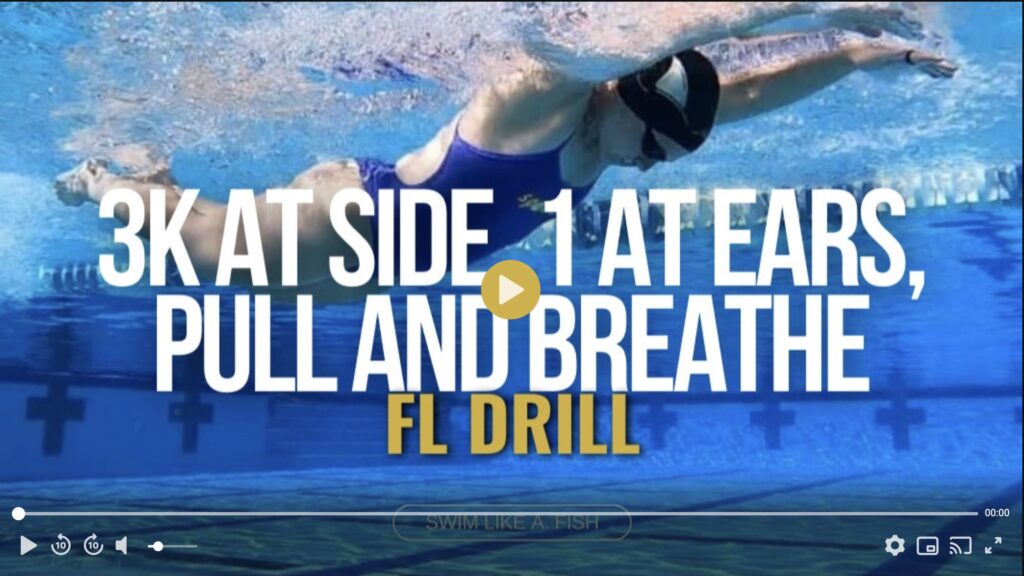
Breathing is where many swimmers lose the Bodyline they’ve worked so hard to develop. This drill slows the breathing sequence down, allowing swimmers to practice lifting the upper body without collapsing through the hips.
Beginning with three kicks while the hands remain at the sides encourages swimmers to establish balance first. Bringing the arms into streamline for one additional kick reinforces a long Bodyline before the pull and breath are added.
Because the stroke unfolds gradually, swimmers have time to feel how the breath should naturally follow the chest rather than leading the movement. The head only needs to clear the water enough to inhale before returning immediately to a neutral position.
If you find yourself throwing your chin upward or lingering with your eyes looking forward, you’re probably lifting the head instead of allowing the body to support the breath.
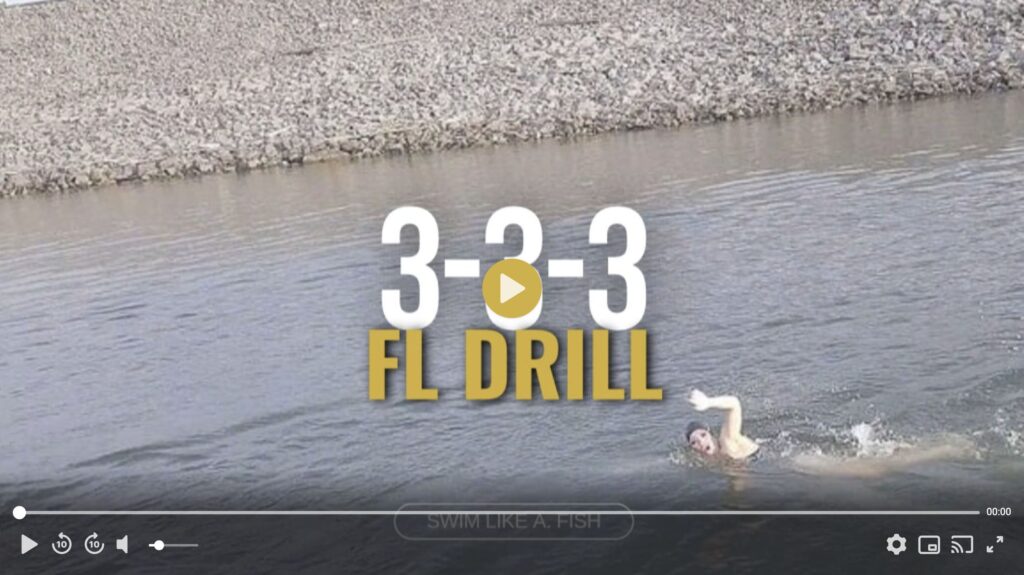
The 3-3-3 Drill is one of the best progressions for connecting drill work to full Butterfly.
By swimming three strokes with the right arm, three with the left, and three full strokes, swimmers gradually build coordination without sacrificing their Bodyline. The single-arm portions encourage patience and balance, while the full strokes challenge swimmers to maintain those same feelings once both arms begin working together.
Many swimmers discover that their Bodyline changes from one side to the other. One arm may recover smoothly while the opposite side causes the hips to drop or the head to lift. The 3-3-3 Drill makes those asymmetries much easier to identify and correct before they become habits during racing.
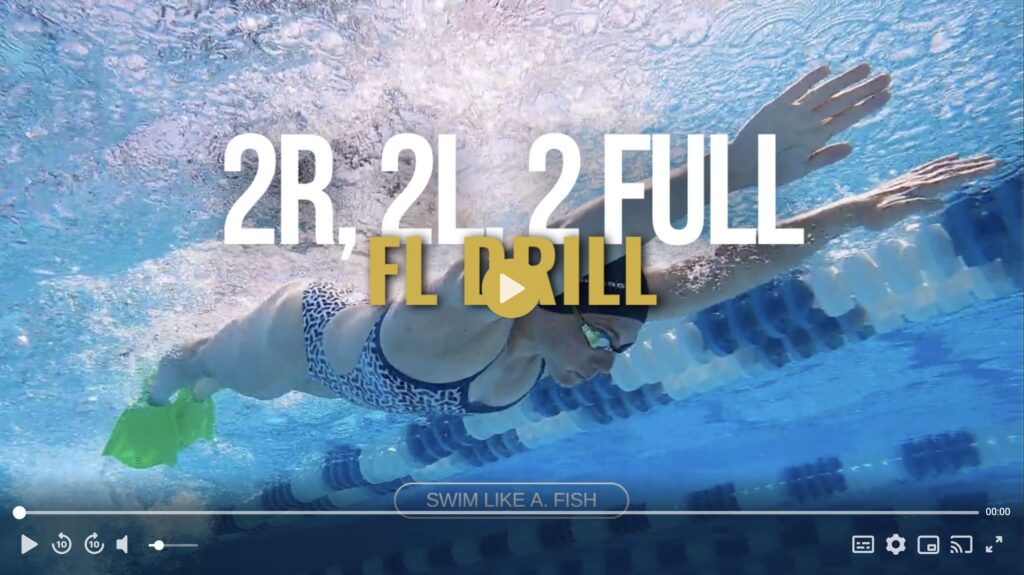
This progression serves as one of the final steps before returning to continuous Butterfly.
Alternating between single-arm and full-stroke swimming reminds swimmers that a good Bodyline doesn’t suddenly disappear when both arms begin working together. Instead, they should carry the same balance, rhythm, and connection they developed during the earlier drills into every full stroke.
Avoid thinking about swimming faster as you complete the final two full strokes. Instead, focus on recreating the same relaxed feeling you experienced during the single-arm portions. If the stroke suddenly feels rushed or forced, slow back down and rebuild the rhythm before increasing speed.
Reading about Bodyline is one thing. Feeling it in the water is another.
Rather than trying all ten drills in a single workout, choose two or three that target your biggest weakness and repeat them consistently for several weeks. Quality is far more important than variety. Once a drill begins to feel natural, replace it with another progression while continuing to reinforce the skills you’ve already developed.
Here’s one of our favorite Butterfly Bodyline progressions:
As you swim the full Butterfly lengths, don’t think about swimming faster. Instead, focus on recreating the same connected feeling you had during the drills. If your head starts lifting too high, your hips begin to sink, or the stroke feels rushed, slow down and return to one of the drills before continuing.
The goal isn’t to collect drills.
The goal is to develop movement patterns that eventually become automatic every time you swim Butterfly.
Great Butterfly isn’t built through brute force. It’s built by maintaining a connected Bodyline from the moment your fingertips enter the water until your feet finish the second Dolphin Kick.
Every drill in this article teaches a different piece of that puzzle. Some develop a smoother body wave, others improve balance during the recovery or breathing, while several reinforce the connection between the kick and pull. Together, they help swimmers create a Butterfly stroke that feels longer, more controlled, and far more efficient.
The next time you practice Butterfly, don’t measure success by how many laps you complete. Instead, ask yourself one simple question: Did every stroke feel connected? If the answer is yes, you’re moving in the right direction.
If you’re ready to take your Butterfly to the NEXT LEVEL, our How to Swim a Faster Butterfly in 90 Days course walks you through every part of the stroke—from Bodyline and timing to breathing, pull mechanics, and race strategy—with step-by-step videos and training progressions.
Coaches looking to teach a more efficient Butterfly should explore our Essentials of Butterfly for Coaches course. You’ll learn the same teaching progressions and drills we use every day to help swimmers build a faster, more connected Butterfly from the ground up.