
What if I told you that most swimmers are giving away free speed—just because of how they start their pull? It’s true. I see it in pools everywhere. Whether you’re a 10-year-old learning the ropes or a masters swimmer chasing best times, the High Elbow Catch can transform your Freestyle.
Let’s break down what it is, why it matters, and exactly how to train it.
The “Catch” is the first phase of your Underwater Pull — think of it as your setup. If you miss this step, everything else in the stroke chain falls apart.
In a High Elbow Catch, the elbow stays above the wrist and fingertips as you extend forward and bend into the pull. This position creates what coaches call an EVF (Early Vertical Forearm). With EVF, your hand and forearm act as one big paddle, pressing water BACK, not down.
Here’s a quick mental picture: imagine you’re paddling a canoe. Would you turn the paddle flat and push water toward the bottom? Of course not — you’d angle it backward to drive the boat forward. That’s exactly why the Freestyle High Elbow Catch is so effective: it anchors the water early and converts every ounce of effort into forward speed.
When I watch swimmers who look “effortless,” it’s almost always because they’re anchoring properly in the catch. A clean High Elbow Catch and Pull lets you:
Now, compare that to a Straight Arm Pull. In the High Elbow Catch vs. Straight Arm debate, Straight Arm may look strong, especially for sprinters chasing tempo. But biomechanically, it usually pushes water down first, lifting the body instead of propelling it forward. That’s wasted energy.
Bottom line: for 99% of swimmers, a High Elbow Catch is the faster, smarter choice.
There’s also the Deep Catch—where the arm drops lower and extends more before bending into the pull. Some open water and distance swimmers swear by it because it feels powerful and lets them “grip” more water over a longer path.
But here’s the trade-off:
When it comes to Deep Catch vs. High Elbow, think efficiency over force. The High Elbow Catch helps you hold water sooner and move it back faster—without fighting against it.
So, how do you actually train this skill? Start with simple High Elbow Catch swimming drills that isolate the feel:
Remember: you don’t swim fast with a catch-up. Sprinters use a continuous, windmill-style motion to maintain Propulsion. But for developing a stronger High Elbow Catch, this drill helps improve stroke timing, DPS, and kick strength.
These drills for High Elbow Catch build the muscle memory you’ll need once you swim full stroke.
One of my favorite ways to teach technique is through underwater video. Seeing is believing—and it helps swimmers connect “feel” with what’s actually happening. Here are a few clips from our library that highlight the mechanics:
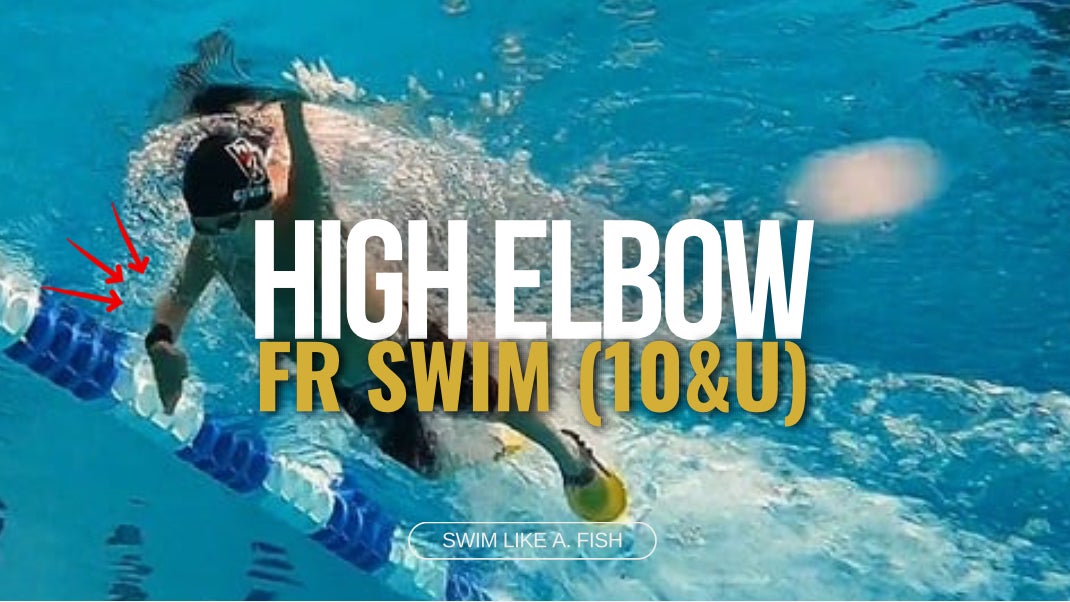
FR Swim: High Elbow (10&U)
Watch how this young swimmer uses fins to really feel the body catapult over the elbow during the pull. It’s a great entry point for age-groupers.
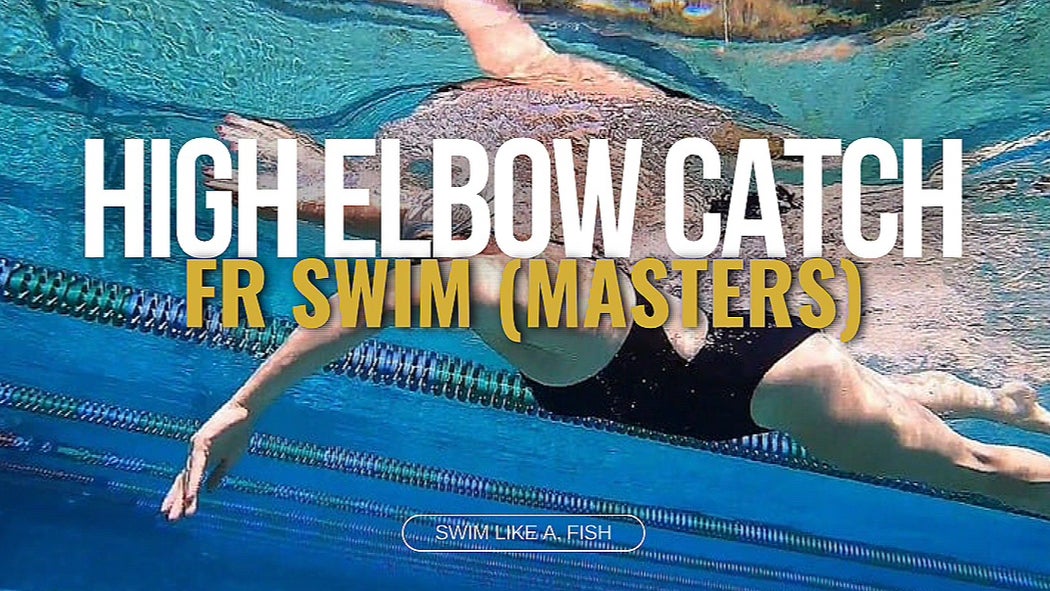
FR Swim: High Elbow Catch (Masters)
This clip shows a masters swimmer hitting textbook EVF. Notice how quickly the fingertips point to the bottom after entry—that’s efficiency in action.
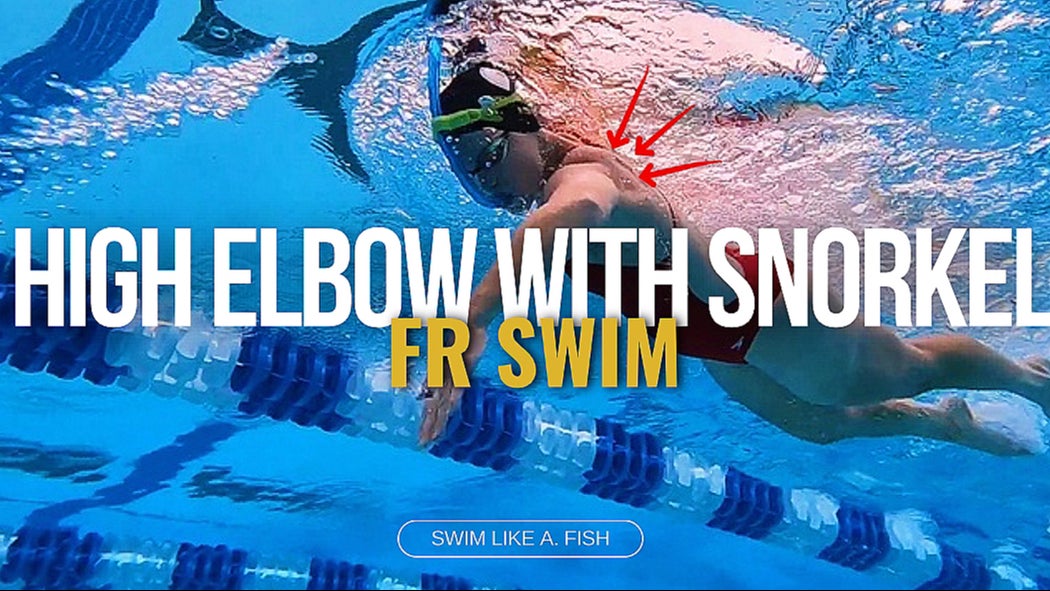
FR Swim: High Elbow with Snorkel
Using a snorkel removes distractions. Here, you’ll see me demonstrate how to keep the elbow high while pressing back with steady pressure.
You’ll see both techniques at the elite level, but they serve different purposes:
See it for yourself in this example: FR Swim: Straight Arm with Snorkel
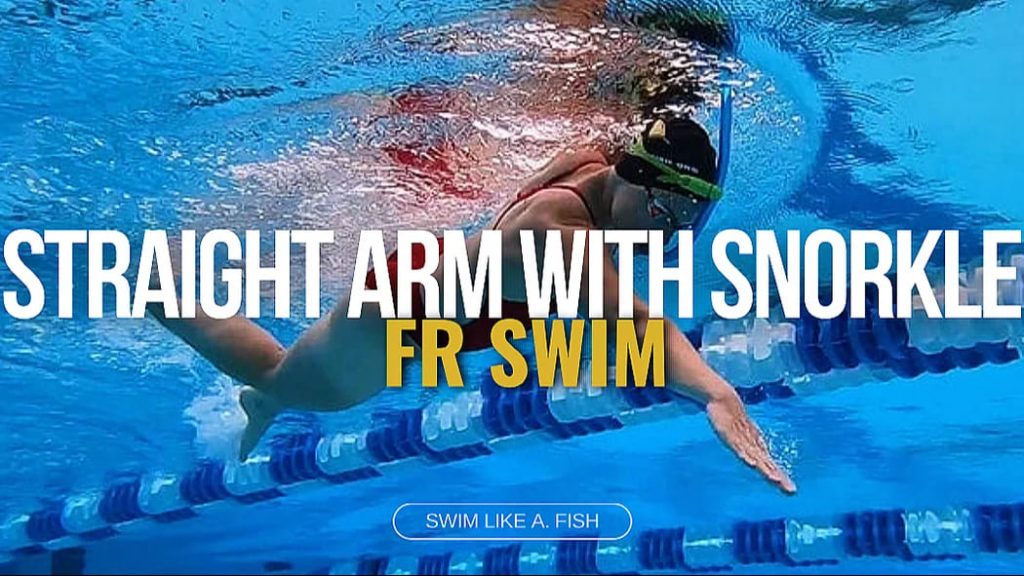
Notice how there’s little bend in the elbow. The pull is quick but doesn’t maximize water hold. Compare that with a High Elbow Catch and you’ll immediately feel the difference.
Now let’s zoom in on the sequence. The High Elbow Catch and Pull technique isn’t just about bending the arm—it’s a whole-body movement.
Here’s the order I teach:
When you connect this motion with body rotation and core engagement, you get effortless swimming High Elbow Catch mechanics that translate strength into forward speed.
Even experienced swimmers miss the mark. The four big errors I see most often:
Remember: the High Elbow Catch and Pull is about patience and positioning—not just muscling through.
The difference between an average Freestyle and a fast, efficient one often comes down to the catch. By focusing on the Freestyle swimming High Elbow Catch, you’ll swim with less effort, more speed, and a lot less shoulder strain.
Action Step: Add two sets of sculling or fingertip drag into your warm-up this week. Pay attention to the pressure on your forearm. Then, carry that same feeling into your full stroke and notice the difference.