
What do Ryan Lochte, Ryan Murphy, Elizabeth Beisel, Jacob Pebley, and Gemma Spofforth all have in common? Each trained under legendary Olympic swim coaches who turned raw talent into world-class speed. Behind every gold medal in Backstroke lies a coach who sees what others don’t — a coach who can spot inefficiencies in a single stroke cycle and refine them into record-breaking performance.
In this post, we dive deep into the philosophies of Dave Durden and Gregg Troy — two of the most accomplished Olympic swim coaches in U.S. Olympic Swimming. From the powerhouse program at Cal Berkeley to the Florida Gators’ championship legacy, their coaching systems have produced some of the fastest backstrokers in Olympic history. Let’s unpack how these two masterminds shaped champions and redefined what elite Backstroke Training really looks like.
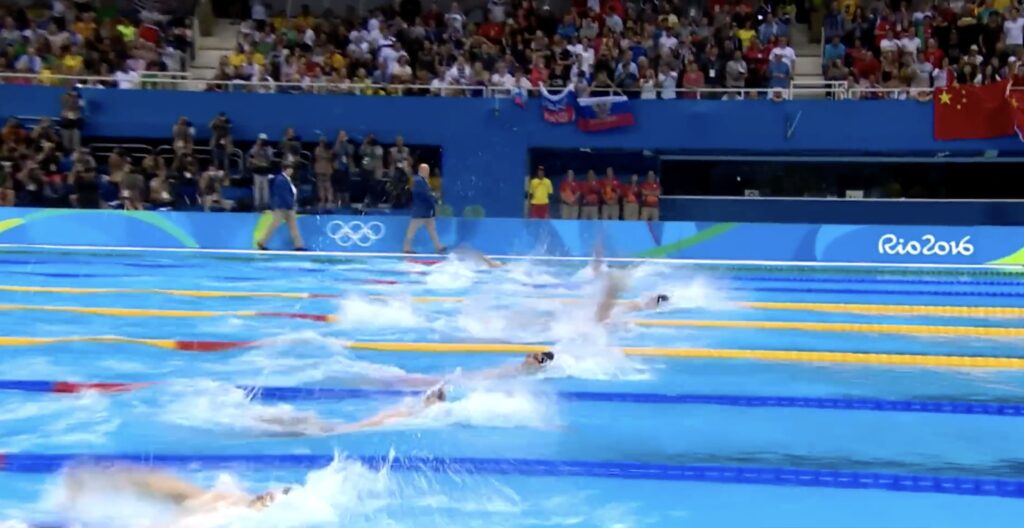
Backstroke isn’t just about strength — it’s about rhythm, rotation, and trust. Swimmers race blind, navigating the pool on feel alone, which means technical precision and mental control are everything. A great Backstroke coach knows how to fine-tune the small details: the Underwater Dolphin Kick, the shoulder-hip connection during rotation, and the stroke tempo that keeps momentum alive off every wall.
At programs like Cal Berkeley and within the U.S. National Team, elite coaches design training systems that build efficiency one repetition at a time. They use video analysis, biomechanics, and tailored dryland work to ensure athletes hit the perfect angle on every pull. Because at the Olympic level, the difference between first and fourth can be just a fraction of a second — and that margin often comes down to the QUALITY of COACHING behind the swimmer.
Before Dave Durden became one of the most respected names in American swimming, he spent years learning his craft alongside some of the sport’s most accomplished minds. After serving as an assistant coach at Auburn University, where he helped the Tigers capture multiple NCAA titles, Durden took the helm at Cal Berkeley in 2007. What followed was nothing short of a dynasty.
Under Durden’s leadership, Cal’s men’s swim team evolved into a powerhouse — producing Olympians, world champions, and NCAA record-holders. His ability to balance high-intensity training with a culture of trust and accountability helped elevate Cal from a top contender to a dominant force in collegiate swimming. When the Tokyo 2020 Games arrived, it was no surprise that Durden was chosen as the U.S. Olympic Men’s Head Coach, leading Team USA to remarkable performances in nearly every event.
Durden’s success isn’t built on gimmicks — it’s built on structure, consistency, and relentless attention to detail. His training philosophy blends technical precision with data-driven feedback. Every set has a purpose, every rest interval is deliberate, and every swimmer understands WHY they’re doing what they’re doing.
At Cal, Durden uses a blend of aerobic base work and speed-specific sets to develop powerful back-end speed — a crucial factor in 100m and 200m Backstroke events. He also emphasizes Underwater Kick development, race-pace training, and individualized stroke adjustments. Through consistent video analysis and biomechanics review, he helps swimmers translate dryland strength into efficient in-water force.
Durden often says that great teams are built on “shared ownership.” Swimmers at Cal are encouraged to take responsibility for their development — from managing recovery to analyzing their own race footage. This culture of accountability not only creates better athletes but future leaders of the sport.
If there’s one stroke that defines Cal Berkeley’s Olympic success, it’s Backstroke. Under Durden’s guidance, athletes like Ryan Murphy and Jacob Pebley turned into world-class backstrokers, earning medals and setting records on the international stage.
Murphy’s dominance in the 100m and 200m Backstroke — including multiple Olympic gold medals — is a direct reflection of Durden’s long-term vision. Every season was designed to peak at the right time, combining the power of collegiate racing with the precision of Olympic preparation. Pebley’s consistent international success further showcased Durden’s ability to individualize training within a team setting — something few programs execute as well.
Durden’s Cal program doesn’t just produce fast swimmers — it builds complete athletes. His mentorship model extends beyond the pool, fostering leadership, discipline, and camaraderie that last long after graduation.
Want to learn from elite-level coaching? Explore our Swim Coach Mentorship Programs — where Olympic-caliber insight meets everyday coaching growth.
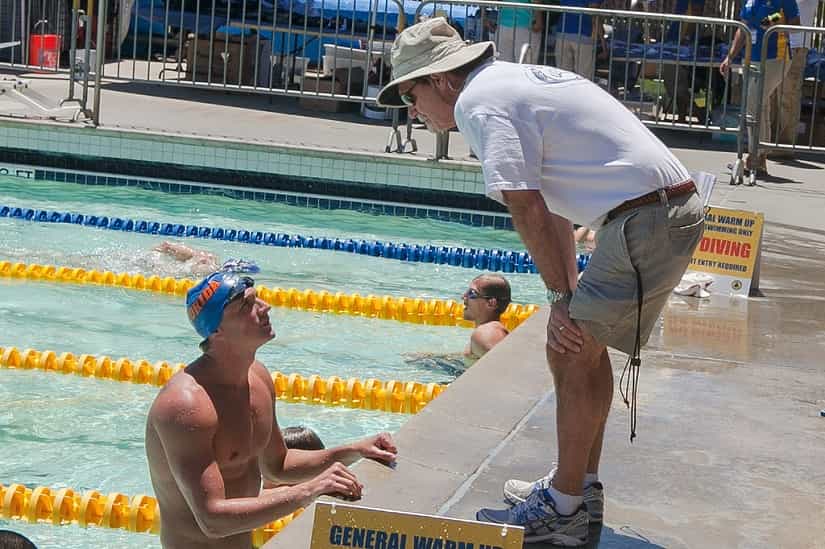
Few coaches in swimming history have produced as many elite-level athletes as Gregg Troy. A cornerstone of the University of Florida’s program for decades and a long-time member of the U.S. National Team coaching staff, Troy has been the guiding force behind some of the sport’s most decorated swimmers — including Ryan Lochte, Elizabeth Beisel, and Gemma Spofforth.
His athletes have won multiple Olympic medals, set world records, and built reputations as some of the toughest competitors in the water. But what truly sets Troy apart is his unwavering belief in discipline, fundamentals, and honest work. In an age of tech suits, analytics, and data tracking, Troy’s results remind everyone that success still comes down to execution, effort, and mindset.
Whether on deck at Florida or poolside at the Olympic Games, Troy’s presence commands respect — not through intimidation, but through decades of consistency and results. For a deeper look into Troy’s coaching wisdom, check out The 5 Things I Learned from Gregg Troy — a personal reflection on the lessons that shaped Swim Like A Fish’s coaching philosophy today
Gregg Troy’s coaching philosophy could be summed up as “old-school meets modern science.” His practices are grounded in high-volume, high-quality training, yet deeply informed by biomechanics, physiology, and recovery science. Each session is built to challenge the swimmer’s limits — physically and mentally — while sharpening their technique under fatigue.
He believes in training the body to think — ensuring swimmers maintain stroke integrity, even in the hardest sets. A hallmark of Troy’s program is the focus on quality yardage: swimming long distances with race-pace awareness and perfect form. This method builds not just endurance, but technical consistency — one of the biggest differentiators at the elite level.
Troy’s sharp eye for detail has defined countless careers. Before the 2008 Beijing Olympics, for example, he fine-tuned Ryan Lochte’s Backstroke tempo, helping him find a rhythm that balanced power and relaxation — a change that played a critical role in Lochte’s gold-medal performances. Similarly, Elizabeth Beisel credits Troy with teaching her how to transition seamlessly between medley events, mastering everything from Backstroke to Butterfly through his structured, disciplined approach.
Beyond the medals and accolades, Troy’s real legacy lies in his mentorship. He’s built a generation of swimmers and coaches who carry forward his principles: work hard, stay accountable, and respect the process. Swimmers under Troy’s guidance often describe him as a “truth teller” — someone who never sugarcoats feedback, but always pushes them toward their best.
His ability to sustain success over decades comes from this balance of structure and care. He understands that to last in this sport, both athletes and coaches must keep learning, adapting, and mentoring the next wave.
Coaches can learn directly from Gregg’s proven system through our Gregg Troy Mentorship Program — an exclusive opportunity to study the same principles that shaped Olympians like Lochte, Beisel, and Spofforth.
Troy’s career is proof that great coaching isn’t just about creating champions — it’s about creating better humans through the pursuit of excellence.
While Dave Durden and Gregg Troy share a common mission — building Olympic-caliber athletes — their coaching paths couldn’t be more distinct. Durden represents the modern, data-driven generation of coaches, blending technology, analytics, and precise programming to shape elite backstrokers. His approach thrives in the collegiate system at Cal Berkeley, where culture, accountability, and teamwork drive results. Every swimmer in his program knows the numbers — splits, tempos, heart rates — and learns how to use that data to fine-tune performance.
Troy, on the other hand, embodies a more discipline-based, individualized philosophy. His success stems from a “no shortcuts” mentality — the kind of training that forges mental toughness through volume, consistency, and mastery of fundamentals. While Durden builds systems that elevate entire teams, Troy builds INDIVIDUALS who redefine their personal limits. Both paths lead to the same destination: excellence on the world stage.
In truth, neither wins alone — because elite swimming requires both. Durden’s structure provides the FRAMEWORK for consistency, while Troy’s discipline develops the GRIT to execute under pressure. One coach leans on technology; the other relies on intuition honed by decades on deck.
Ask any Olympic swimmer, and they’ll tell you — success isn’t about finding the “perfect” coaching method. It’s about committing fully to one. As Gregg Troy once said, “The secret isn’t the set — it’s what you bring to it.” And that’s what unites both coaches: a relentless pursuit of excellence, built on trust, hard work, and an unshakable belief that greatness is earned, not given.
The biggest lesson from both Durden and Troy? Excellence comes from doing the small things right — over and over again.
For swimmers, that means mastering the invisible details: underwater efficiency, tempo control, and the ability to hold form when fatigue hits. Both coaches preach the value of self-awareness — knowing how each stroke feels and how to make micro-adjustments mid-race.
Swimmers should treat coach feedback as gold. Instead of waiting for corrections, learn to self-correct — to feel when your hips drop, or when your kick loses rhythm. And just like their Olympians, balance intensity with recovery. Progress doesn’t come from hammering every set; it comes from executing the right sets, with purpose and precision.
For coaches, the takeaway is clear: mentorship and structure matter. Durden shows the power of systemization — building team environments where every swimmer thrives on accountability. Troy, on the other hand, proves the value of individualized attention and long-term athlete development.
Modern coaches should strive to blend both worlds: use technology and video analysis to spot inefficiencies, but pair that data with authentic mentorship and honest feedback. Study stroke mechanics, analyze Backstroke rotations, and help swimmers understand WHY changes matter. That’s the formula both Durden and Troy mastered — and the one every coach can use to elevate their athletes.

Ready to elevate your coaching game? Learn directly from world-class mentors like Gregg Troy, Jack Bauerle, and Mike Bottom — the same coaches who’ve trained Olympic champions and world-record holders.Start your journey today with our Swim Coach Mentorship Program and gain insider access to elite training philosophies, proven practice structures, and personalized guidance to help you coach at the next level.
