
What if I told you one of the best ways to get faster in the pool doesn’t involve your arms at all? That’s right — the Flutter Kick is your secret weapon. It’s simple, effective, and one of my personal favorite ways to build speed and endurance.
Honestly, this kick is just FUN. It’s one of those training tools that spikes your heart rate without overworking your shoulders. One of my buddies at UGA actually kicked the majority of the season — and ended up winning NCAAs. How’d he do it? By kicking not just well, but FAST.
You can get a fantastic workout from kicking alone. Plus, the Flutter Kick is easier to maintain than a Dolphin Kick, yet still hits your core and hip flexors hard. I love programming longer kick sets with it because of its aerobic nature. You can go for distance and still come out feeling strong.
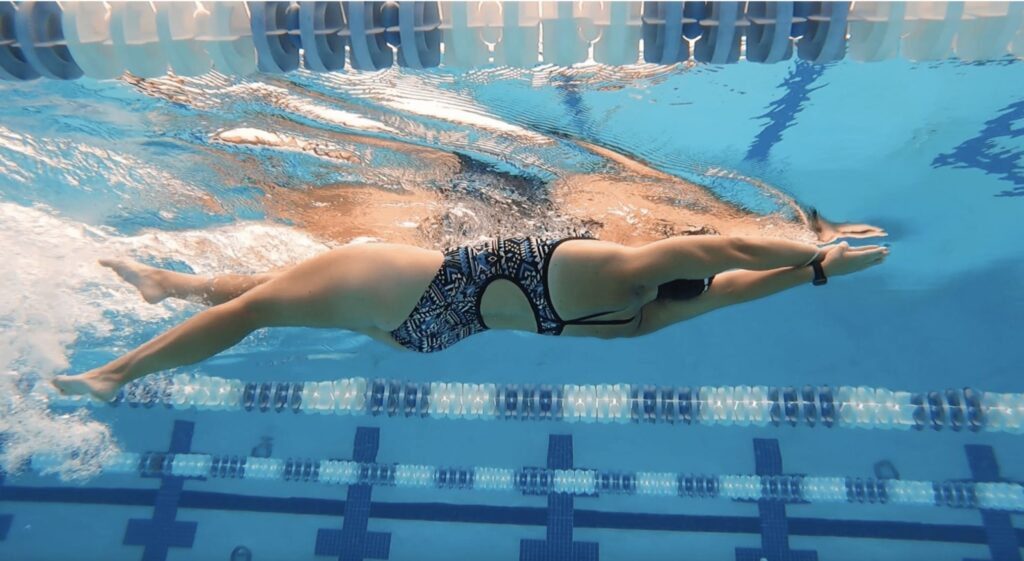
The Flutter Kick is the alternating leg motion you see in Freestyle and Backstroke. It’s continuous, small, and driven from your hips — not your knees. Think of your legs as long levers, and your toes as the whip at the end of the chain.
When you do it right, your body line stays high, your core stays tight, and your kick drives your stroke forward.
Here’s the muscle breakdown:
(Mind-blowing how much lower body work you get from just one movement, right?)
When we take the Flutter Kick underwater, it becomes a whole different challenge — and a fantastic way to refine body alignment, rhythm, and feel for the water. The goal is to stay long and smooth while creating consistent propulsion with small, controlled kicks.
Start by holding a perfect streamline — arms overhead, eyes looking straight down, and your core locked in. The movement should start from your hips, not your knees. Think about keeping your legs long and your ankles soft so your toes can act like an extension of your legs. Every kick should feel connected from your core all the way through your feet.
Breathing is just as important here. Exhale slowly and steadily through your nose to keep your body relaxed and buoyant. The more tension you carry, the more drag you create — and that kills speed.
Watch These Drills to See It in Action:
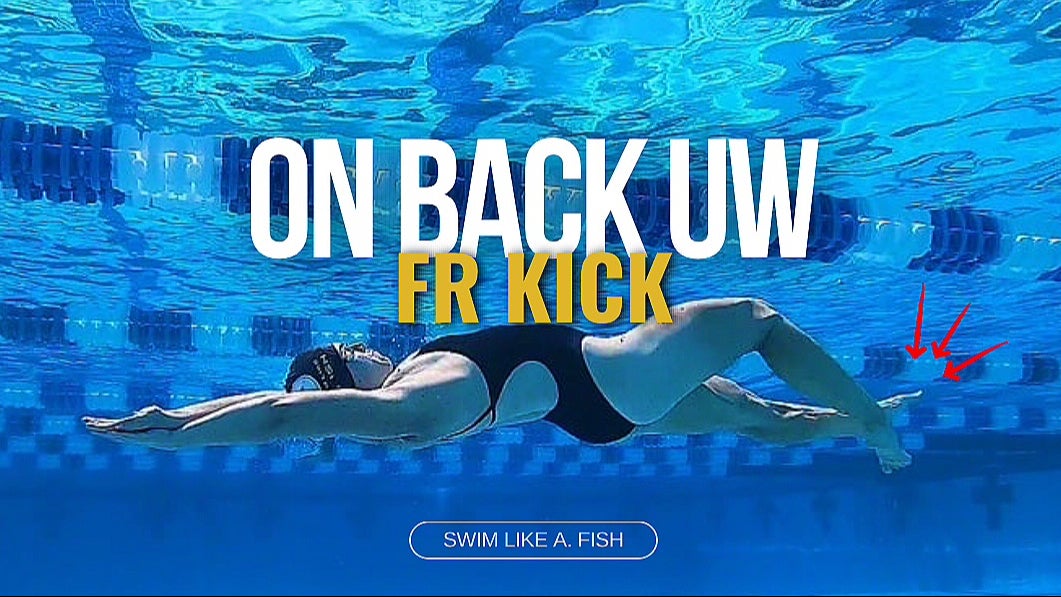
UW Kicking Drill: FR Kick On Back
In this video, I’m kicking underwater while on my back, maintaining streamline the entire time. Notice how relaxed my toes are — they move as a natural extension of my leg, not as separate pieces. This drill helps you find balance, maintain rhythm, and feel how the hips drive the movement.
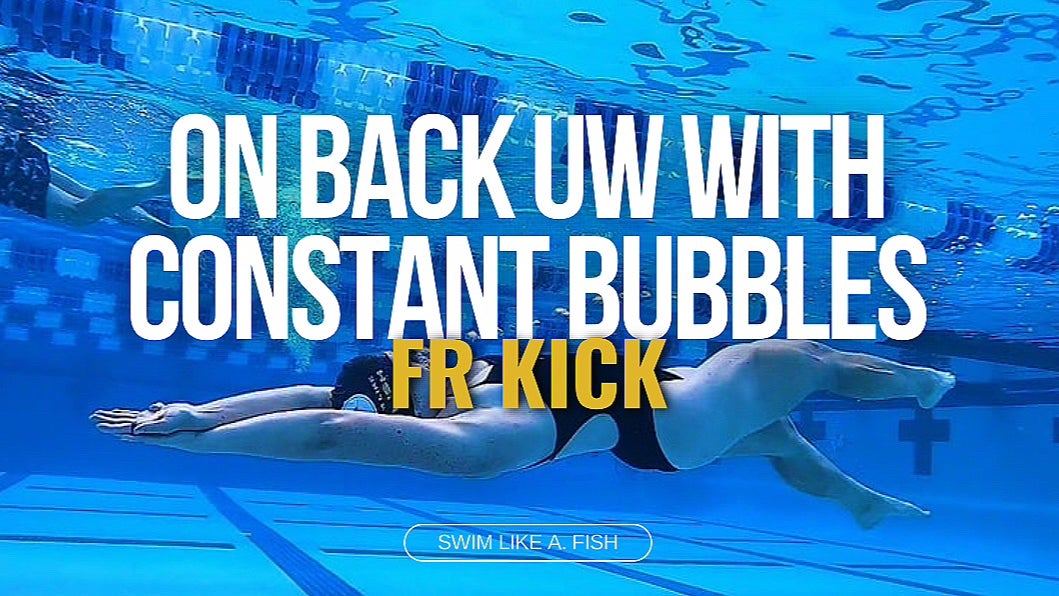
UW Kicking Drill: FR On Back W/ Constant Bubbles
This one adds an extra focus — consistent exhaling. You’ll see a steady stream of bubbles as I kick. That breathing rhythm keeps the body loose and the motion continuous. It’s a great reminder that control and relaxation are what make your kick fast and efficient underwater.
Both of these drills build awareness. You’ll learn to connect your hips, core, and legs so your kick becomes part of a fluid, full-body motion — not just something happening behind you.
You can also work your kick outside the pool. Try On-Land Flutter Kicks — they’re one of the best dryland exercises for swimmers.
Watch the Demo: Best Dryland Exercise to IMPROVE Your Flutter Kick!
How to do it:
Because the floor limits your range, focus on control. Keep the legs in front of your core and stay smooth through each rep. If you can keep your legs moving with good form here, your in-water kick will feel easier and stronger.
Here’s what I see all the time:
The most common issue I see with Flutter Kick is swimmers trying to muscle it. They bend their knees too much, which just creates drag and slows everything down. The movement should come from the hips, not the knees. Another big one—tight ankles. If your ankles are locked, your feet can’t grab the water, and all that effort goes nowhere. Relax them so your toes can act like fins. And please, don’t make your kicks huge. Bigger isn’t better here—small, fast, and consistent is the goal. Lastly, don’t forget your core. The moment your abs switch off, your legs start to sink, and your kick stops helping your stroke altogether.
The Flutter Kick isn’t just for beginners — it’s a foundational skill for every stroke. It:
Builds leg and core endurance
Strengthens your hip flexors
Keeps your body in a high, efficient position
Improves overall aerobic capacity
Gives your shoulders a break between pull-heavy sessions
Basically, it’s your built-in cardio workout — no treadmill required.
If you’re new to kick training:
For more advanced swimmers:
You can also alternate kick and swim for a combo set (like 50 Kick / 50 Swim for 800 yards).
If you’re looking for a structured progression, we just launched our Kick Season Plans that match our Technique Season Plans. These programs guide you through all six styles of kicks — over 4 or 8 months — for organized, effective development.
Compared to the Dolphin Kick, the Flutter Kick is more aerobic and sustainable — perfect for long-distance or recovery sets. It’s also easier to maintain technique over time.
Use the Dolphin Kick for power, the Vertical Kick for strength, and the Flutter Kick for rhythm and consistency. Together, they’ll make you a more complete swimmer.
If you want a stronger, faster stroke — and better endurance — build your base with the Flutter Kick. Keep your kicks small, your hips steady, and your core engaged. The better you kick, the smoother your whole stroke will feel.
Check out our Video Analysis Packages for personalized feedback from our coaching team.
And if you’re ready to organize your kick training, explore our new Kick Season Plans — 4-month and 8-month options available!
4-month Kick Season Plans8-month Kick Season Plans