
What if I told you there’s a simple way to clean up your Freestyle timing—and make your stroke look instantly smoother? The Catch-Up Drill has been a staple for swimmers of all levels, from Olympians to Masters, because it teaches the THREE KEYS to efficient Freestyle: patience, distance per stroke, and a strong kick connected to a High Elbow Catch.
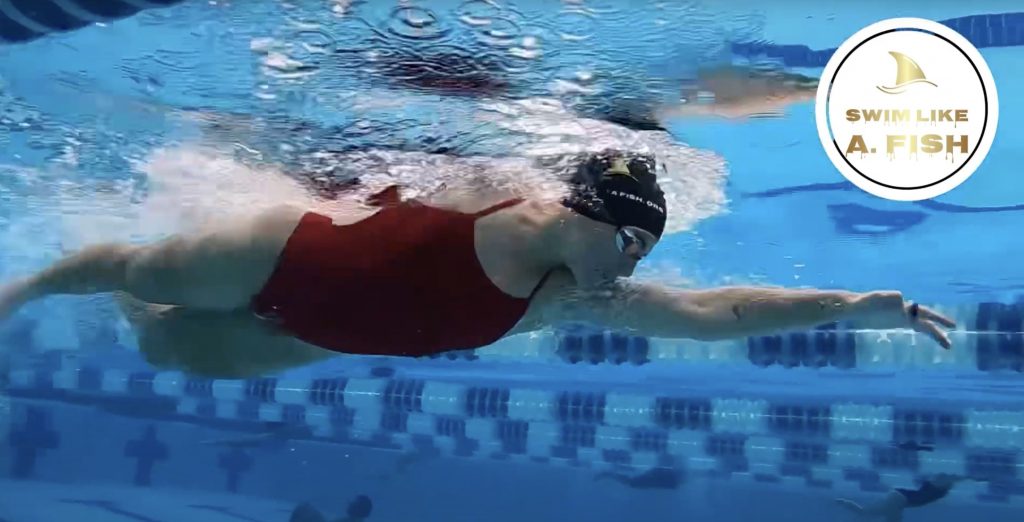
The Catch-Up Drill in Freestyle is where one arm waits for the other before pulling again. Imagine swimming Freestyle, but your lead hand stays extended until the recovering hand reaches it. Once the hands “catch up,” the cycle repeats.
This controlled pause highlights extension, balance, and rhythm. It also prevents the rushed, choppy strokes that drain energy. That’s why coaches call it one of the most important Freestyle Drills for both beginners and advanced swimmers.
The biggest advantage of the drill is timing. Many swimmers, especially younger ones, spin their arms too quickly. That creates inefficient strokes and messes with the rhythm of a constant windmill motion you’d like to see. The Catch-Up Drill intentionally breaks up that inefficient rhythm to teach control and front-end patience.
The Catch-Up Drill is not a “fast” drill. It’s designed to build Distance Per Stroke (DPS), improve core stability, and reinforce a High Elbow Catch. The extended front arm improves body alignment and reduces drag, allowing swimmers to feel a longer, more efficient Pull when they return to full-speed Freestyle.
Start in streamline, then extend one arm forward. The other arm completes a full stroke—Catch, Pull, and Recovery—before tapping the other arm in front. Only when the hands touch or nearly touch do you switch sides (i.e. ¾ Catch-Up Drill).
Think of it like a relay exchange: your stationary arm doesn’t “start” until it is tagged by the moving arm. The rhythm is deliberate and controlled — NOT rushed or performed at race tempo.
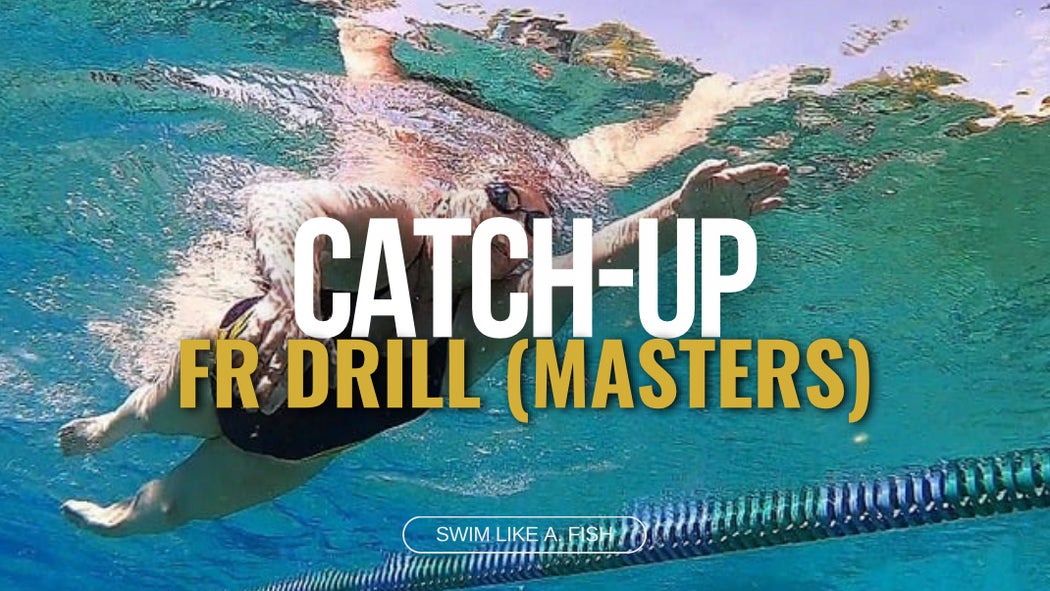
See this underwater version: Fr Drill: Catch-Up (Masters).
Holding a kickboard in the lead hands adds stability. The swimmer grips the board out front while the opposite arm swims. This emphasizes rotation and balance without losing streamline. Coaches often recommend alternating arms every 25 meters.
Mixing Single Arm Freestyle with the Catch-Up Drill is a great progression. For example, swim 25 meters with the right arm, 25 meters with the left, then 25 meters with full Catch-Up. This builds awareness of each side before integrating them together.
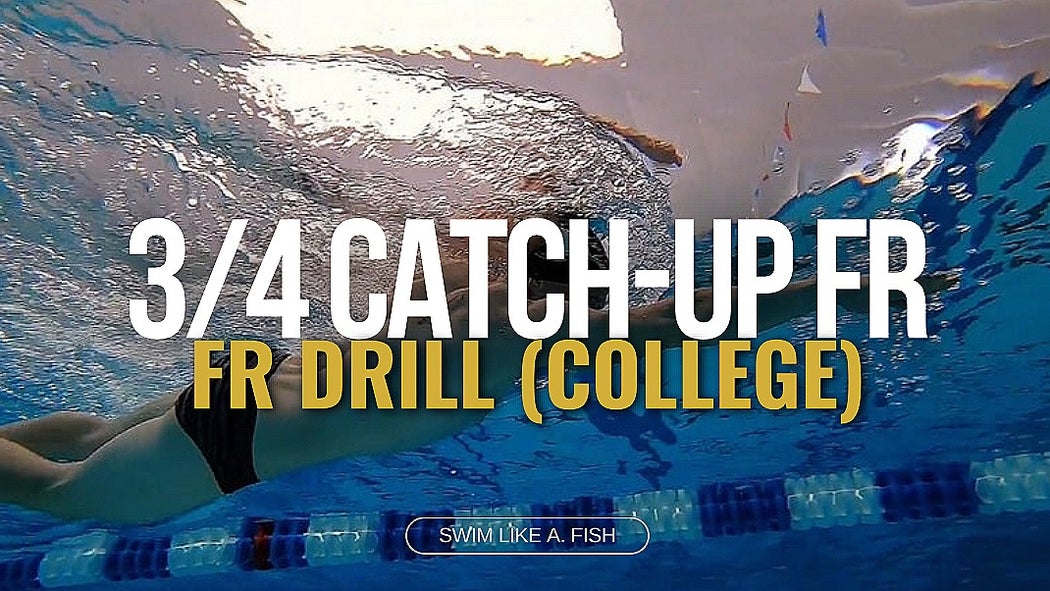
The 3/4 version introduces a bit more rhythm. The recovering arm begins its pull when it’s about three-quarters of the way through. This version helps swimmers bridge the gap between slow drill timing and the continuous “windmill” stroke used at faster speeds. Example: Fr Drill: 3/4 Catch-Up FR (College).
For younger swimmers, holding a toy or small paddle in the lead hand makes the pattern easier to remember. It reinforces patience and keeps training fun.
This advanced variation isolates the front-end catch. One hand is strapped to a paddle and extended forward. The other arm pulls only to the catch phase before recovering. It helps swimmers feel power and connection at the very start of each pull. Demo: Fr Drill: Catch + Turn Around.
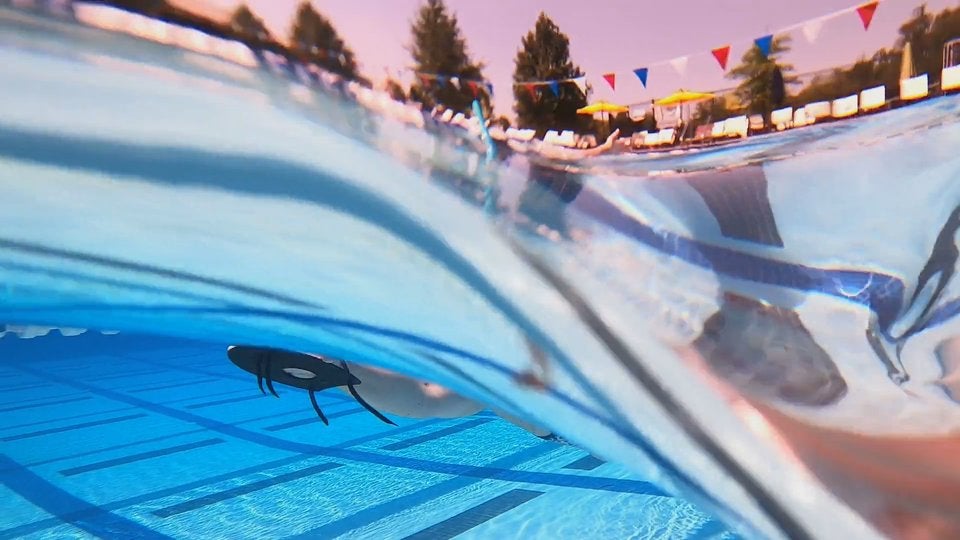
Different swimmers learn timing at different paces. Age-group swimmers often start with a slower, exaggerated version to build habits. Older swimmers move toward 3/4 Catch-Up or tempo drills that prepare them for full-stroke rhythm.
The most common error is Over-Gliding—waiting too long at the front, which creates dead spots in the stroke. Instead, think of a quick tag rather than a long pause.
Other mistakes include dropping the lead elbow underwater, which kills the High Elbow Catch, and forgetting to rotate through the hips and shoulders. Breathing every stroke can also throw off balance—try every three strokes to stay aligned.
You should never swim fast with a full Catch-Up stroke. This drill is a teaching tool — not a racing technique.
While it may feel slow, that’s the point. The Catch-Up Drill builds stroke discipline, not tempo. Swimmers learn how to extend forward, engage the core, and press back through the water with the entire forearm.
At Swim Like A Fish, we teach a “quick touch” version — the hands connect briefly before the next pull begins. This keeps the flow continuous without losing the technical benefits.
You don’t need to swim endless laps. Just a few 25s or 50s in warm-up or technique sets sharpen awareness.
Example set:
Use this drill to build the feel of timing and connection — not speed. Once you’ve mastered it, transition back to your regular “windmill” Freestyle and notice how much smoother and stronger it feels.
At your next practice, swim 200 meters of Catch-Up Drill Freestyle. Record yourself or ask your coach to watch. Notice whether your stroke feels longer, smoother, and more balanced. Then, test that same awareness during regular Freestyle — with consistent propulsion.
Check out our Video Analysis Packages for personalized coaching.
Or take your technique further with our 90-Day Freestyle Program — a proven path to efficiency and speed.